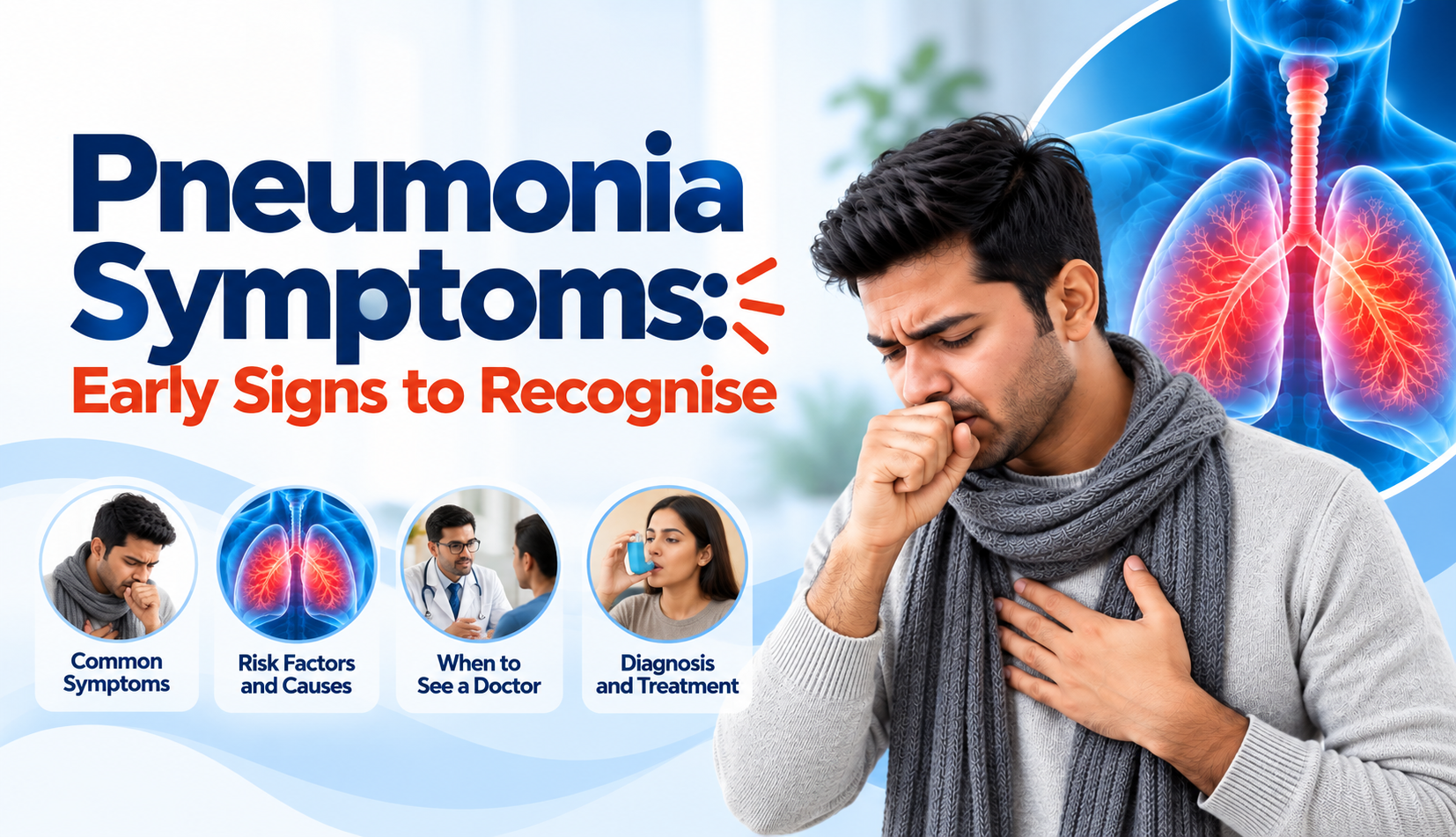
Pneumonia Symptoms: Early Signs to Recognise
A cough, fever or feeling unusually tired can often be mistaken for a common cold or seasonal flu. But when these symptoms become stronger, last longer than expected or are accompanied by breathing difficulty, they may point to something more serious. Pneumonia is one such condition.
Pneumonia is an infection that affects the lungs and can make it difficult for the body to get enough oxygen. It can affect people of any age, but older adults, young children and people with existing health conditions may be at greater risk of complications.
Recognising the early symptoms can help you seek medical attention at the right time. Here is what you should know about the common signs of pneumonia, when they need attention and how doctors evaluate breathing-related symptoms.
What Is Pneumonia?
Pneumonia is an infection in one or both lungs. It can be caused by bacteria, viruses and, less commonly, fungi. During pneumonia, the tiny air sacs inside the lungs can become inflamed and may fill with fluid or pus. This can interfere with normal breathing.
The symptoms can vary from person to person. Some people develop symptoms suddenly, while others notice them gradually over several days.
In some cases, pneumonia may begin after a cold or flu-like illness. A cough that seemed manageable at first may become more persistent, while fever, weakness or breathlessness gradually appear.
Common Pneumonia Symptoms to Watch For
Knowing what pneumonia feels like can help you recognise when a respiratory infection needs medical evaluation.
1. Persistent or Worsening Cough
A cough is one of the most common symptoms of pneumonia. It may start as a dry cough and later produce mucus or phlegm.
The colour and amount of mucus can vary, and coughing may become more frequent as the infection progresses. If a cough is getting worse instead of improving, particularly when accompanied by fever or breathing difficulty, it should not simply be ignored.
2. Fever and Chills
Pneumonia can cause fever as the body responds to infection. Some people may also experience chills or episodes of sweating.
The temperature may not always be extremely high, particularly in older adults. Therefore, the absence of a high fever does not necessarily rule out pneumonia.
3. Shortness of Breath
Feeling breathless during normal activities can be an important warning sign.
You may notice that walking a short distance, climbing stairs or doing routine household work leaves you more short of breath than usual. In more severe cases, breathing may feel difficult even while resting.
Sudden or significant breathing difficulty requires prompt medical attention.
4. Chest Pain
Pneumonia can sometimes cause chest discomfort or sharp pain, particularly while taking a deep breath or coughing.
This type of pain can occur because the tissues surrounding the lungs become irritated. However, chest pain can have several causes, including conditions that require urgent treatment. New or severe chest pain should therefore be medically assessed rather than assumed to be pneumonia.
5. Unusual Tiredness and Weakness
Pneumonia can leave you feeling much more exhausted than you would expect from an ordinary cold.
Even after sleeping, you may feel weak or have very little energy for normal activities. This happens because your body is using energy to fight the infection, while breathing problems can add to the physical strain.
6. Loss of Appetite
A reduced appetite can occur during pneumonia. Some people may also experience nausea or simply have little interest in food.
When illness continues for several days, maintaining adequate fluids and nutrition becomes important, particularly for older adults and people recovering from other health conditions.
7. Fast or Difficult Breathing
Rapid breathing can occur when the lungs are struggling to work normally.
Parents may notice faster breathing in a child, while adults may feel that they cannot take a satisfying breath. If breathing becomes increasingly difficult, medical evaluation should not be delayed.
Pneumonia Symptoms in Older Adults
Pneumonia does not always look the same in older adults.
Instead of developing a high fever and strong cough, an older person may become unusually weak, confused, sleepy or less interested in eating. A sudden change in behaviour or daily functioning can sometimes be an important sign of infection.
People with conditions such as diabetes, heart disease or chronic lung problems may also need closer monitoring when they develop respiratory symptoms.
When Should You See a Doctor?
Not every cough or fever means pneumonia. Many respiratory infections improve with rest and supportive care. The concern increases when symptoms are persistent, worsening or affecting your ability to breathe normally.
- A cough that is becoming worse
- Persistent fever or chills
- Increasing breathlessness
- Chest pain while breathing or coughing
- Significant weakness or fatigue
- Blood in the mucus
- Bluish lips or fingertips
- Confusion or unusual drowsiness
- Difficulty breathing at rest
Severe breathing difficulty, significant chest pain, confusion or bluish lips should be treated as urgent symptoms.
How Is Pneumonia Diagnosed?
A doctor usually begins with your symptoms and medical history. They may ask when the cough started, whether you have fever, whether you are producing mucus and whether you are experiencing breathlessness or chest pain.
The doctor may also listen to your lungs with a stethoscope.
Depending on the symptoms and examination, additional tests may be recommended. These can include a chest X-ray, blood tests, oxygen saturation measurement or other investigations.
The exact tests depend on the patient's age, symptoms, medical history and how severe the illness appears to be.
When Are Additional Lung Tests Needed?
Not everyone with pneumonia needs advanced respiratory testing. However, if symptoms continue after an infection, keep coming back or suggest another underlying lung problem, a pulmonologist may recommend additional evaluation.
For selected patients, bronchoscopy in Panchkula may be considered when doctors need to examine the airways more closely or investigate persistent respiratory symptoms. It is not a routine test for every case of pneumonia.
Similarly, a lung function test in Panchkula can help assess how well the lungs are working when there is concern about conditions such as asthma, COPD or other breathing disorders. It may be useful when breathlessness continues even after the infection has improved.
These tests are chosen according to the patient's clinical situation rather than simply because pneumonia has been diagnosed.
Can Sleep Problems Be Related to Breathing Symptoms?
Sometimes people continue to experience tiredness, disturbed sleep or breathing-related problems even after recovering from a respiratory infection. However, these symptoms can have many different causes.
If a person snores heavily, wakes up gasping, experiences repeated nighttime breathing interruptions or feels excessively tired during the day, a doctor may consider whether an underlying sleep-related breathing disorder is present.
A sleep study in Panchkula may be recommended in appropriate cases to evaluate breathing and other changes that occur during sleep.
It is important to remember that a sleep study is not a standard test for pneumonia. It is used when symptoms suggest a possible sleep-related breathing problem.
What Can Help During Pneumonia Recovery?
Recovery can take time, especially after a more significant lung infection. Following the treatment plan provided by your doctor is important.
- Getting adequate rest
- Drinking enough fluids unless your doctor has advised fluid restriction
- Avoiding smoking and second-hand smoke
- Taking prescribed medicines as directed
- Eating nutritious meals as tolerated
- Avoiding strenuous physical activity until you feel stronger
- Keeping follow-up appointments when recommended
Do not start antibiotics on your own. Pneumonia can have different causes, and antibiotics are not effective against viral infections.
Can Pneumonia Be Prevented?
Not every case of pneumonia can be prevented, but several everyday measures can reduce the risk of respiratory infections.
Regular hand washing, avoiding close contact with people who are unwell, maintaining good respiratory hygiene and avoiding tobacco smoke can all help protect lung health.
Vaccination may also be recommended for certain people depending on their age, medical history and risk factors. Discuss appropriate vaccinations with your doctor.
People with existing lung conditions should also follow their treatment plans and seek medical advice when respiratory symptoms change.
Don't Ignore Changes in Your Breathing
A cough after a respiratory infection does not automatically mean pneumonia. At the same time, symptoms that are becoming stronger should not be dismissed as “just a cold.”
Pay attention to the overall pattern. A worsening cough combined with fever, chest discomfort, unusual weakness or shortness of breath deserves medical attention.
Early evaluation can help doctors identify whether the symptoms are due to pneumonia or another respiratory condition and decide whether further testing or treatment is needed.
Conclusion
Pneumonia can begin with symptoms that look similar to a common cold or flu, but increasing cough, fever, breathlessness, chest discomfort and unusual weakness can indicate that the infection needs medical attention.
The most important thing is not to diagnose yourself based on one symptom. If your breathing changes, your symptoms are getting worse or you are finding it difficult to perform normal activities, speak with a healthcare professional.
For people with persistent or recurring respiratory symptoms, a pulmonologist can assess the lungs and determine whether additional investigations, such as a lung function test in Panchkula, bronchoscopy in Panchkula or, when appropriate, a sleep study in Panchkula, may be useful.